When you’re on the road, the last thing you expect is a crash. Yet, they happen every day in Kern County. The most common types of motor vehicle accidents include rear-end collisions, side-impact crashes, head-on collisions, and accidents involving trucks or motorcycles. While every situation is unique, many crashes fall into recognizable patterns, which can help clarify how the incident occurred and who may be responsible: an analysis a personal injury lawyer often relies on when evaluating a claim.
Key Takeaways About the Most Common Types of Motor Vehicle Accidents
- Rear-end collisions are one of the most frequently reported types of vehicle accidents, often occurring in congested traffic or at intersections where cars stop suddenly.
- Side-impact collisions, which include T-bone and sideswipe accidents, can lead to significant injuries because the sides of a vehicle offer less structural protection.
- The specific type of motor vehicle accident can influence how responsibility is determined, as certain collision patterns often point to a specific negligent action.
- Crashes involving large commercial trucks, motorcycles, pedestrians, or bicycles present distinct challenges and frequently result in more severe consequences for those involved.
- California law follows a comparative negligence standard, which may affect financial recovery if more than one person is found to be at fault for an accident.
A Closer Look at Collision Types on Bakersfield Roads
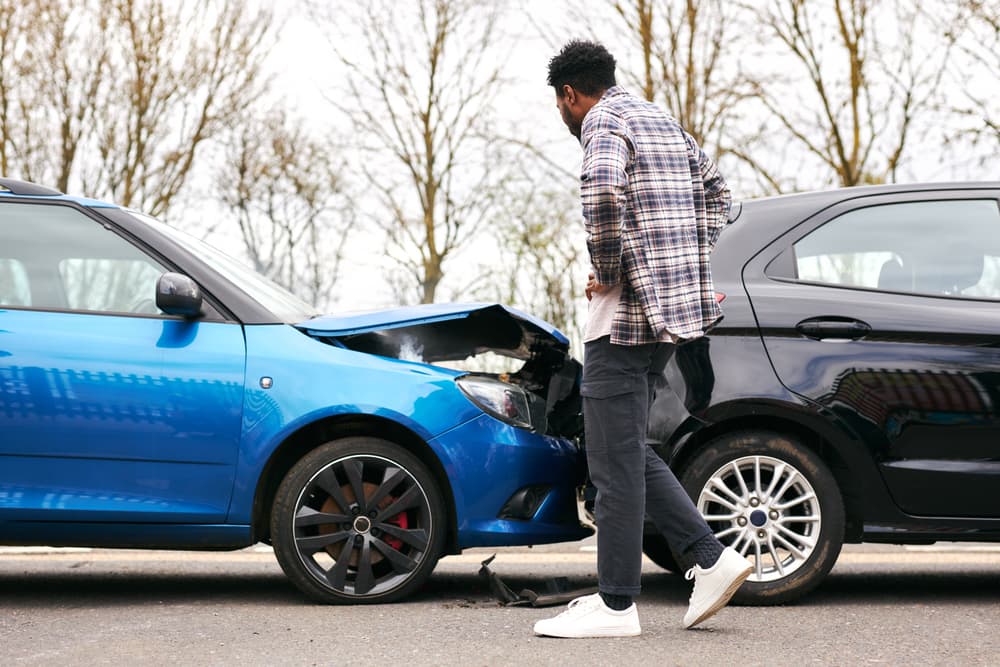
From the busy lanes of Highway 99 to the neighborhood streets in Seven Oaks, different traffic situations can lead to different kinds of accidents. While no two crashes are identical, many share common characteristics. Recognizing these patterns is a key part of investigating a collision.
Here’s a breakdown of some of the most common types of motor vehicle accidents we see in our community.
Rear-End Collisions
A rear-end collision happens when the front of one vehicle strikes the back of another. These are incredibly common, especially in stop-and-go traffic on major roads like Rosedale Highway or when a driver isn’t paying attention and fails to stop in time at a red light.
The primary causes often involve a driver’s lack of attention or poor judgment. These can include:
- Distracted Driving: Texting, talking on the phone, or adjusting the radio can take a driver's eyes off the road just long enough for them to miss a stopped or slowing vehicle ahead.
- Tailgating: Following another vehicle too closely leaves no room to stop safely if the lead car brakes suddenly. California law requires drivers to maintain a safe following distance.
- Speeding: A driver going too fast may not be able to slow down in time to avoid a collision.
In these cases, there is often a legal concept that comes into play called a "rebuttable presumption." In simple terms, this means the law generally presumes the driver who rear-ended the other vehicle is at fault. However, this assumption can be challenged with evidence showing the lead driver was also negligent, for instance, by having broken brake lights or suddenly reversing.
Side-Impact Collisions
Side-impact collisions occur when one vehicle hits the side of another. Because the sides of a car have much less protective structure than the front and back, these crashes can be particularly dangerous. The two main kinds of side-impact crashes are T-bone accidents and sideswipes.
- T-Bone Accidents: Also known as broadside collisions, these happen when the front of one car crashes into the side of another, forming a "T" shape. They are frequent at intersections, like the one at Stockdale Highway and California Avenue, when a driver runs a red light or fails to yield the right-of-way on a left turn.
- Sideswipe Accidents: This type of collision involves the sides of two vehicles scraping against each other while traveling in the same or opposite directions. Sideswipes are common during unsafe lane changes on multi-lane roads or when a driver drifts out of their lane.
The location of the damage and the point of impact are critical pieces of evidence in these cases, often helping to reconstruct the series of events that led to the crash. This is why a thorough investigation is essential after these common types of vehicle collisions.
Head-On Crashes and Rollover Accidents
While less frequent than rear-end or side-impact collisions, head-on and rollover accidents are among the most serious types of motor vehicle accidents. The physics involved in these crashes often leads to catastrophic damage and severe injuries.
Head-On Collisions
A head-on collision occurs when the front ends of two vehicles traveling in opposite directions collide. The force of impact is immense because it combines the speeds of both vehicles. These tragic accidents can happen when a driver falls asleep at the wheel, is under the influence, or becomes distracted and drifts across the center line on a two-lane road, such as the rural routes found throughout Kern County. They can also occur when a driver enters a freeway ramp going the wrong way.
The consequences of a head-on accident are often devastating, making it crucial to hold the responsible party accountable.
Rollover Accidents
A rollover accident happens when a vehicle flips onto its side or roof. These are complex events that can be "tripped" or "untripped." A tripped rollover happens when a vehicle hits something low, like a curb or a soft shoulder, causing it to roll. An untripped rollover is less common and is usually caused by a sharp, high-speed maneuver.
Vehicles with a higher center of gravity, like SUVs and pickup trucks, are more susceptible to rolling over. These crashes can eject occupants who are not wearing seatbelts and may involve multiple impacts as the vehicle continues to roll, increasing the risk of serious harm.
Accidents Involving More Vulnerable Road Users
Many of the most common types of motor vehicle accidents don’t just involve two passenger cars. When a smaller vehicle, a motorcyclist, or a person on foot is involved in a crash with a larger vehicle, the results can be life-altering.
Truck Accidents
Bakersfield is a major hub for commerce, with commercial trucks constantly moving along I-5 and Highway 99. A collision with an 80,000-pound semi-truck is fundamentally different from a standard car crash. The sheer size and weight of a large truck mean that any collision can have a massive impact.
Investigating these accidents is also more complex. Common causes include:
- Driver Fatigue: Truck drivers are often on the road for long hours, and fatigue can impair judgment as much as alcohol.
- Improper Cargo Loading: If cargo is unbalanced or not secured correctly, it can shift and cause the driver to lose control.
- Maintenance Issues: Worn brakes, bad tires, or other mechanical failures can lead to disaster.
- Blind Spots: Large trucks have significant blind spots, or "no-zones," where a passenger car can disappear from the driver's view.
Because federal and state regulations govern the trucking industry, these cases may involve looking at driver logs, maintenance records, and company hiring practices to determine all responsible parties, which could include the driver, the trucking company, a cargo loader, or a maintenance provider. This is a critical distinction in these specific types of motor vehicle accidents.
Motorcycle Accidents
Riding a motorcycle on the open roads around Kern County can be a great joy, but it also comes with significant risks. Motorcyclists lack the protection of an enclosed vehicle, making them incredibly vulnerable in a crash. Even a low-speed collision can result in serious injuries, such as road rash, broken bones, or traumatic brain injuries.
Many motorcycle accidents happen because other drivers simply fail to see them. Common scenarios include a car making a left turn into the path of an oncoming motorcycle or a driver changing lanes without checking their blind spot. Holding inattentive drivers accountable is vital for protecting the rights of injured riders.
Pedestrian and Bicycle Accidents
People walking or cycling in Bakersfield, whether downtown or in a residential neighborhood, are completely unprotected in a collision with a car. Accidents at crosswalks, intersections, or on the side of the road are unfortunately common. California law requires drivers to yield the right-of-way to pedestrians in marked and unmarked crosswalks.
When drivers are distracted, speeding, or fail to yield, the consequences for a pedestrian or cyclist can be severe. These cases highlight the immense responsibility drivers have to share the road safely with everyone.
Understanding Fault in California Car Accidents
After any of the common types of motor vehicle accidents, one of the first questions is, "Who was at fault?" In California, the answer often involves the legal idea of "negligence." Simply put, negligence is when someone fails to use reasonable care to prevent harm to others. A driver who runs a red light, texts while driving, or follows too closely is acting negligently.
California uses a "pure comparative negligence" rule to assign fault. This means that you may still be able to recover financial compensation for your injuries even if you were partially to blame for the accident. For example, if you were found to be 20% at fault for the crash, your total compensation award would be reduced by 20%. This rule ensures that responsibility is divided fairly based on each person's role in the incident.
Steps to Take After a Motor Vehicle Accident
Once you are home and have addressed your immediate medical needs, the process of recovery begins. Staying organized can make a significant difference in protecting your rights and preparing for what comes next. Here are a few steps to consider:
- Document Everything: As soon as you are able, write down every detail you can remember about the accident. Where were you going? What did you see and hear? What was the weather like? Also, keep a dedicated folder for all accident-related documents, including the police report, medical records, bills, and car repair estimates.
- Track Your Recovery: It’s helpful to keep a simple journal about your injuries. Note your pain levels, list all your doctor’s appointments, and describe how the injuries are affecting your ability to do daily activities like work, chores, or hobbies. This record can be very important later on.
- Report the Accident to Your Insurer: You should notify your own insurance company about the accident. When you do, provide the basic facts of what happened. Avoid guessing about details or admitting fault.
- Be Careful with Other Insurance Companies: The other driver’s insurance adjuster may contact you soon after the crash. Remember, their job is to protect their company's financial interests by settling the claim for as little as possible. It is often wise to consult with a personal injury attorney before you provide a recorded statement or sign any documents.
Taking these steps can help you maintain control over your information and ensure that your story is preserved accurately.
FAQs for Common Types of Motor Vehicle Accidents
We understand you have many questions after being involved in one of the most common types of motor vehicle accidents. Here are answers to a few that we hear frequently.
What if the other driver was uninsured or underinsured?
If the at-fault driver has no insurance or not enough insurance to cover your damages, you may be able to make a claim through your own insurance policy if you have Uninsured/Underinsured Motorist (UM/UIM) coverage. This is an optional but highly recommended type of coverage in California that protects you in these situations.
How long do I have to file a personal injury claim in California?
In California, the time limit for filing a personal injury lawsuit, known as the statute of limitations, is generally two years from the date of the injury. There are some exceptions, so it's important to understand the specific deadline that applies to your situation. If you miss this deadline, you may lose your right to seek compensation.
What kind of compensation can be recovered after a motor vehicle accident?
Compensation, often called "damages," is intended to help an injured person become whole again. It can cover both economic and non-economic losses. This may include money for medical bills, future medical treatment, lost wages, diminished earning capacity, property damage, and compensation for pain and suffering.
What is a "wrongful death" claim in the context of a car accident?
If a motor vehicle accident tragically results in a person's death, certain surviving family members may be able to file a wrongful death claim. This type of legal action seeks to hold the negligent party accountable and recover damages for the financial losses and emotional hardship the family has suffered due to their loved one's passing.
Do I need a lawyer if the accident seems minor?
Even accidents that seem minor at first can lead to complications. Injuries like whiplash may not show symptoms for days, and what appears to be a small amount of vehicle damage can hide more serious structural problems. Speaking with an attorney can help you understand your rights and options, ensuring you don't settle for less than you deserve before the full extent of your damages is known.
Let Us Help You Move Forward
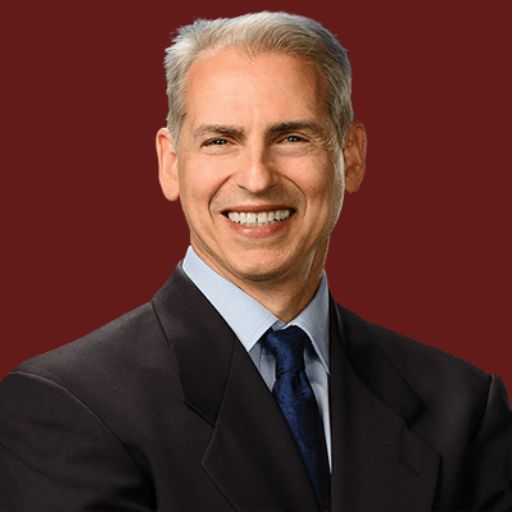
Dealing with the consequences of a serious car crash can feel like a heavy burden. At the Law Offices of Mickey Fine, we are here to help lift that weight. With over 30 years of experience serving the Bakersfield community, Mickey Fine is dedicated to helping people injured by negligence get the resources they need to rebuild their lives.
We believe in a personalized approach, where your case gets the direct attention it deserves. We are committed to holding responsible parties accountable and will fight for the full and fair compensation you need, now and for the future. It costs nothing to see if we can help you. Contact us today for a free consultation to discuss your case.